OUR TECHNOLOGY
JOURNEY
Explore the evolution of Neural Newscast's content generation system from NNC 1.0 to today's advanced 3.0 platform.
Why this technology exists
Neural Newscast’s technology stack exists to make timely, consistent, and scalable news production possible — not to remove human judgment, but to support it. Automation allows broader coverage and faster synthesis, while human review ensures accuracy, context, and editorial responsibility.
A simple view of the workflow
- Source monitoring and signal detection
- AI-assisted summarization and drafting
- Human editorial review and corrections
- Voice synthesis and audio assembly
- Final publication and distribution
Timeline and History
JULY 2024
NNC Takes Its First Steps
Neural Newscast was initiated, first hosted on iono.fm. This initial setup highlighted the need for automation, as it required manual daily publishing steps. Towards the end of July, a pivotal transition was made to Transistor.fm. This move enabled leveraging their API for automated publication of daily news episodes and the scheduled release of other shows, laying the groundwork for NNC 1.0.
NNC 1.0
AI Personalities & Python Core
The first iteration, NNC 1.0 (detailed in the section below), was hosted by AI personalities "Andy Logic" and "Sara Synax". The core of this version was built on Python, focusing on news aggregation, AI-driven curation, and automated episode production.
JANUARY 2025
The Dawn of NNC 2.0
Work commenced on NNC 2.0. This phase involved a significant Python rewrite aimed at improving overall content quality and introducing several replacement voices to the audio pipeline. While an advancement, NNC 2.0 still relied on Python as its backbone.
NNC 2.5
Ad-Hoc Episodes & "NNC Create"
NNC 2.5 marked the introduction of an enhanced web interface for generating ad-hoc episodes. This iteration incorporated additional voice synthesis capabilities, including a voice for our founder, Chad Thompson, allowing for rapid production without traditional recording sessions.
The script generation tool, dubbed "NNC Create," enabled scripts to be written and then voiced using a selection of speech synthesis systems.
The first episode created with this technology was "Oracle Cybersecurity: Unpacking Recent Incidents with Expert Insights from Chad Thompson".
NNC 3.0 (INITIAL)
Node.js Power & Advanced Scripting
NNC 3.0 began with a strategic rewrite of "NNC Create" using Node.js. This shift allowed for more finite control and introduced block-based editing for scripts. Producers gained the ability to manually generate scripts and edit granular details or allow AI to write scripts based on provided content. Voicing options expanded further, incorporating a broader range of speech synthesis voices, including more controllable voice characteristics via instructions. The first episode published using this revamped NNC Create system was "India-Pakistan Tensions: Operation Sindoor and the Path to Peace".
NNC 3.0 (CURRENT)
Full Orchestration & Future Shows
In its current phase, NNC 3.0 encompasses not only the web-based ad-hoc script creation system but also includes a fully rewritten daily news summary and deep dive episode orchestration system, producing high-quality episodes daily. The first daily episode published using this newly created Node.js system was on May 13th, 2025, titled "Breaking Stories and Global Updates: May 13, 2025". This marked the first time that the previously used Python scripting had been fully replaced. Post May 13th, 2025, all new ad-hoc and daily episodes are published with the new Node.js platform. Building upon this robust technology, we are actively developing a show creation system. This will empower the creation of entirely new shows, such as "Nerfed.ai" (video game news and reviews) and "Stereo Current" (music news and reviews), further expanding the Neural Newscast universe.
The Evolution of Neural Newscast
The Neural Newscast project has undergone significant evolution since its inception, reflecting our commitment to leveraging technology to deliver timely and engaging news content. Our journey spans three transformative phases:
NNC 1.0: The Python Beginnings
Neural Newscast 1.0 leveraged a sophisticated, custom-built Python-based system to bring timely news summaries. At its heart, the system intelligently gathered information from a wide array of trusted news sources, including feed readers, news APIs, and RSS feeds.
Episode Creation Pipeline
Smart algorithms and AI categorized stories, identified significant developments, and filtered redundancies.
Detailed scripts with virtual reporters, transitions, and natural handoffs for comprehensive coverage.
Professional mixing with custom intros, outros, and background music for broadcast quality.
Technology Stack
Neural Newscast 1.0 was a testament to how cutting-edge AI and automation could be harnessed to deliver reliable, engaging, and timely news content with precision and care.
NNC 2.0: Web Technologies & Content Refinement
Neural Newscast 2.0 marked a significant step forward with a substantial Python backend rewrite and the introduction of a PHP-based frontend. This hybrid approach improved content quality, expanded AI voice variety, and laid the groundwork for sophisticated content management features.
Enhanced Scripts
Improved quality and naturalness
Voice Variety
Expanded AI voice options
Web Interface
PHP frontend for management
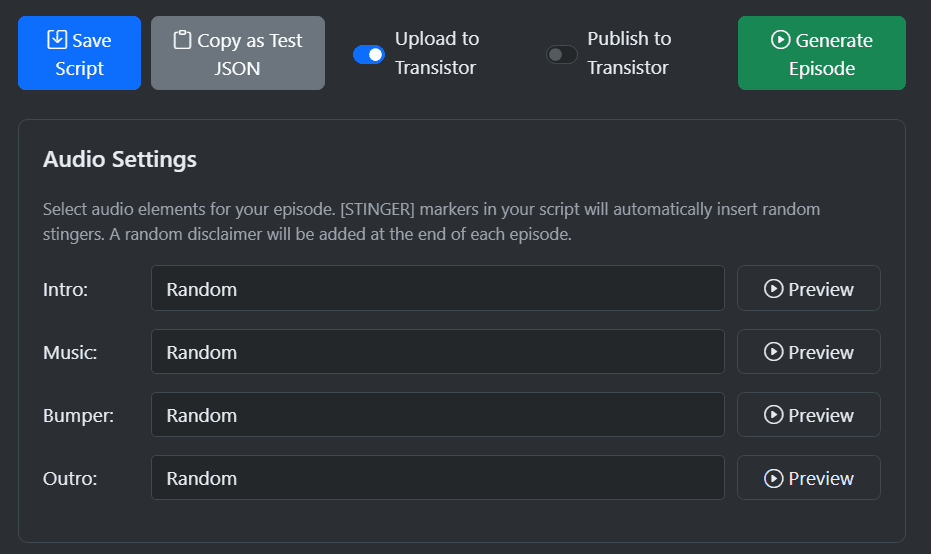
NNC 2.0 web interface for content management
NNC 3.0: Node.js Power & Advanced Generation
The current era represents a major leap in content generation capabilities, driven by Node.js adoption for our core pipeline. This strategic shift enabled a more efficient, scalable, and robust system with advanced AI workflows and sophisticated editing tools.
Multi-Stage AI Workflow
Block-Based Editor
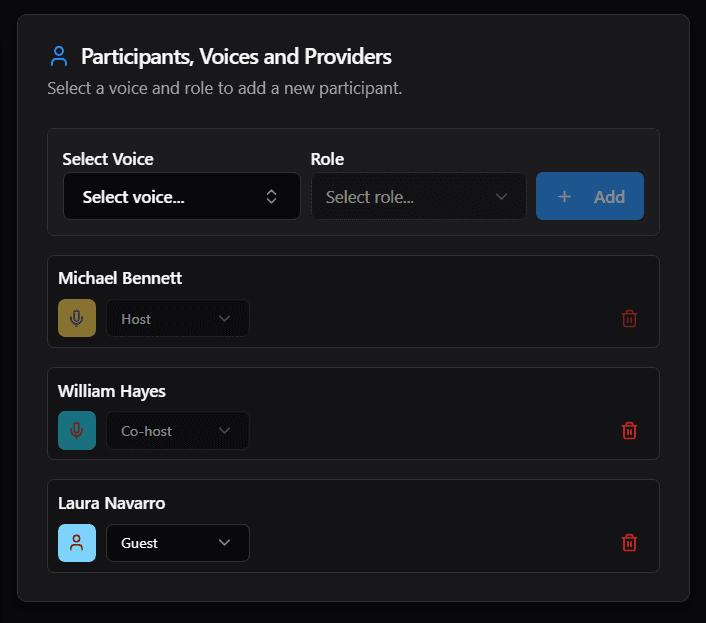
NNC 3.0 advanced interface for episode generation
Technology Ecosystem
NNC 3.0 represents the culmination of our technological evolution, featuring automated workflows that move from news aggregation to published episodes with unprecedented speed and quality.
For details on how we ensure accuracy, accountability, and responsible use of these systems, see our AI Transparency & Accountability page.